How a launch crowd actually finds you
Most of a launch’s traffic shows up on one or two days, and you don’t pick which. A reviewer posts. A campaign hits its last forty-eight hours. A retailer flips the listing live. People read about the product somewhere else, type its name into a search box, and click the first thing that looks official.
If that’s your page, you get to make the case. If it isn’t, they land on a forum thread from a year ago, a reseller with the wrong price, or a competitor’s ad bought against your name. Most of them won’t search twice.
The same thing now happens through AI assistants. Someone asks what a new game or gadget is and how many people it’s for, and the answer is assembled from whatever pages the tool could read. If your page states the facts plainly, the ones printed on the box, the tool has something right to repeat.
What a launch page has to get right
It’s live before the moment, not after. That changes the build order. The page goes up on your own domain with the content that exists, at a preview link you can review the next day, and late assets drop into placeholders sized for them. The polish can follow.
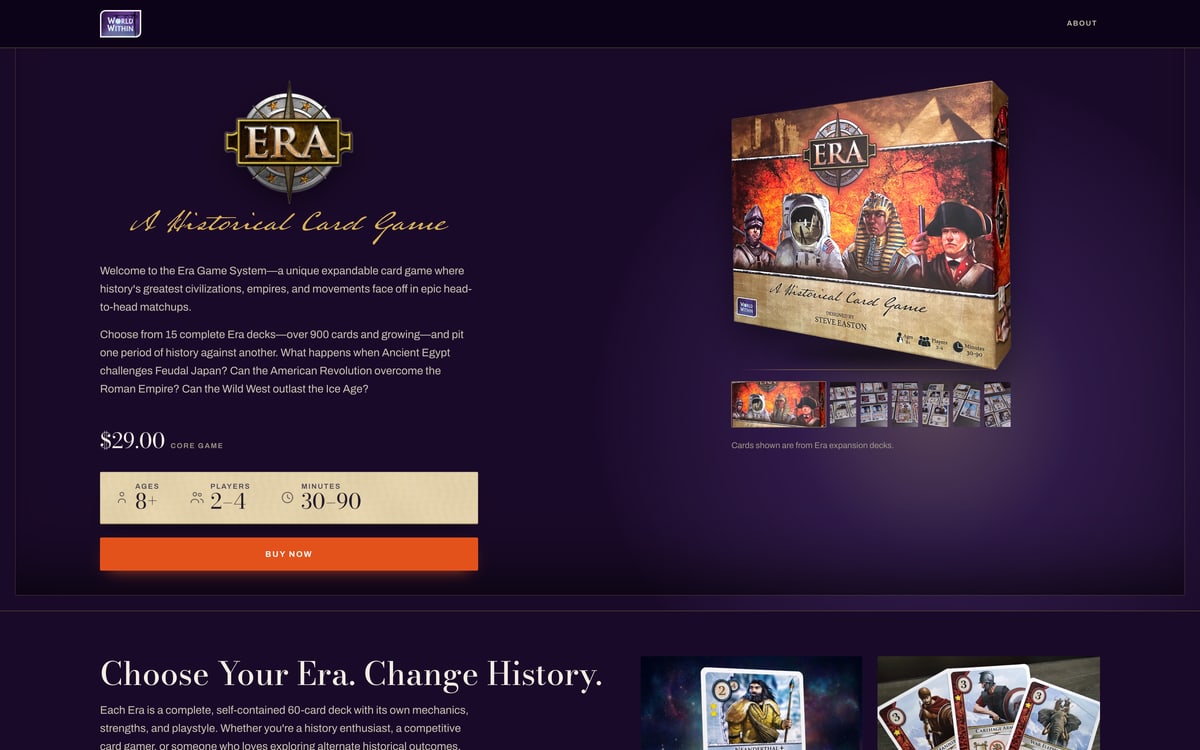
It answers the buyer’s checks and sends them to buy. What is it, who is it for, how much is in the box, what do real people say, and where do I order. One product page that answers those in order, with one button pointed at wherever orders are taken today: a preorder platform, your own store, a retailer.
It outlasts the launch. A second retailer, a second product, an About page that grows into a company site. The page is built so those are additions, not a rebuild, and the domain, the code and the site are in your name from day one. The launch checklist has the details.