How an MSP actually gets found
Most new MSP business starts with a bad week somewhere else. A ransomware scare, a backup that wasn’t, an IT guy who stopped answering. Then an owner or an office manager is told to get three quotes, and the first thing they do is look you up.
That visit is a background check, not a browse. Is this a real company. How long have they been doing this. What do they hold. Who would I actually be talking to. If the answers are on an About page nobody opens, or behind a rotating banner over a stock skyline, the visit ends without a call.
There’s a newer version of the same check. People ask an AI tool what a managed services contract should include, or which providers cover their area, and the tools answer from whatever they can read cleanly. An MSP site written in plain, structured language gets quoted. A brochure doesn’t.
Three things an MSP’s website has to do
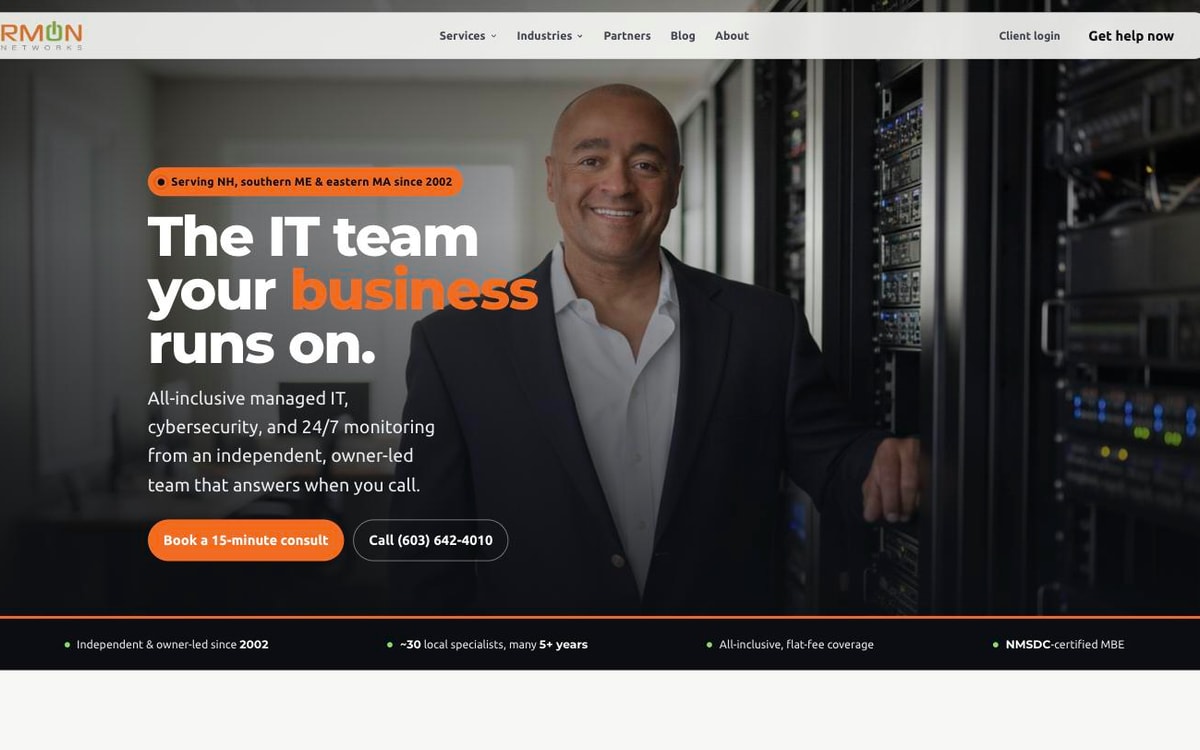
Lead with what you’ve earned. Partner status, certifications, years in business, a review score if it’s good. Not in a badge wall, and not on a page three clicks deep. A first-time visitor should see the two or three that matter in the first screen, and be able to find the rest.
Show the people who answer the phone. An MSP sells trust in people. A template with stock photography says the opposite of that, and every competitor’s site is already saying it. Real photos of your engineers, named, are the single strongest thing you can put on the page.
Answer the questions before the sales call. What’s included, how onboarding works, what a response time means, what happens at renewal. Written the way you’d say it, structured so Google and AI search can pick it up and quote you rather than a directory.